
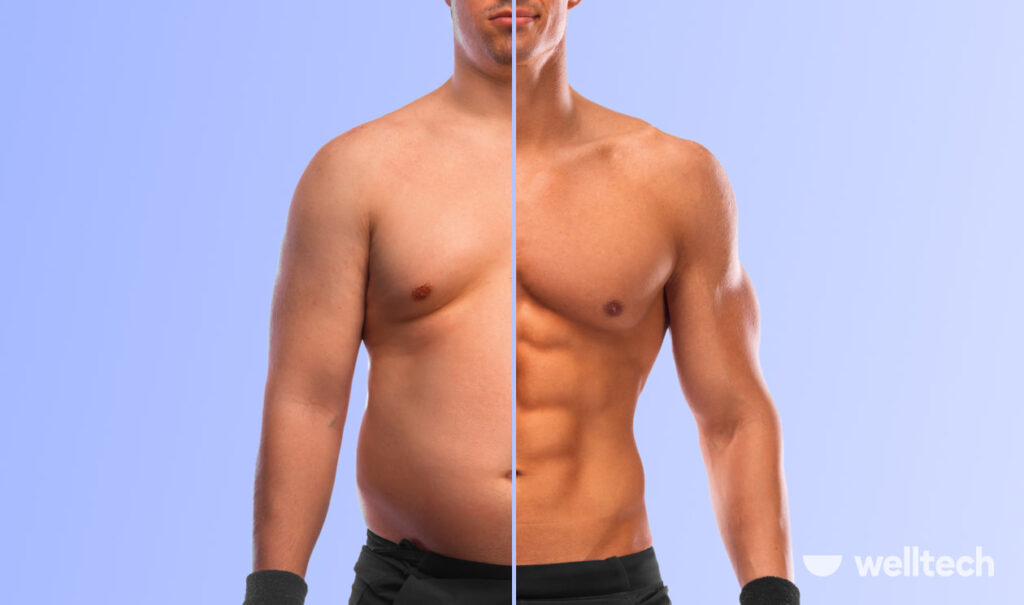
When starting a fitness journey, many people focus only on the number on the scale. But is losing weight really the best goal? The debate of body recomposition vs weight loss is important if you want long-term results.
Let’s understand which approach is better for you.
What is Weight Loss?
Fat
Muscle
Water
Most people achieve weight loss by staying in a calorie deficit (eating fewer calories than they burn).
Problem: You may lose muscle along with fat, leading to a “skinny fat” look.
What is Body Recomposition?
Body recomposition focuses on:
Losing fat
Gaining muscle at the same time
Instead of just lowering weight, the goal is to improve your body composition.
Result: You may not lose much weight, but your body looks leaner and stronger.
Key Differences
| Factor | Weight Loss | Body Recomposition |
|---|---|---|
| Focus | Scale weight | Fat + muscle |
| Muscle | Often lost | Preserved or gained |
| Appearance | Smaller | Lean & toned |
| Approach | Diet-focused | Diet + strength training |
Which is Better?
Choose Weight Loss if:
You are highly overweight
Your main goal is quick scale reduction
You are just starting out
Choose Body Recomposition if:
You want a lean and muscular body
You are doing strength training
You want long-term results
For most people, body recomposition is the better approach.
Best Strategy for Body Recomposition
Eat enough protein (1.2–1.6 g/kg body weight)
Do strength training 3–4 times/week
Stay in a slight calorie deficit
Get proper sleep and recovery
Common Mistakes
Only doing cardio
Eating too little protein
Ignoring strength training
Focusing only on weight
Results Timeline
2–4 weeks: Strength improvement
6–8 weeks: Visible fat loss
12+ weeks: Lean muscle definition
Final Thoughts
Weight loss focuses on the scale, while body recomposition focuses on how your body looks and performs.
If your goal is a fit, lean, and strong body, body recomposition is the smarter and more sustainable choice